Six-Pack Abs or a Lean Physique: What Shapes Attraction?
A man starts going to the gym because he hopes someone will notice him. Another wants a different silhouette in the mirror. A third wants to carry his shopping without feeling so tired. These imagined reasons can overlap. Wanting to feel attractive is not unusual, but it becomes a difficult foundation when every workout needs approval from an audience.
Six-pack abs or a lean physique: which is more attractive? There is no answer that speaks for all adult women, or for all adults of any gender. Preferences vary, and attraction involves more than one visible feature. A physique cannot guarantee interest, compatibility or a relationship.
A first impression is not a universal ranking
Someone may appreciate pronounced muscle, someone else a leaner build and someone else neither. People can value different features in different contexts, and an attractive photograph is not the same thing as enjoying someone’s company. A small survey or a collection of comments cannot settle what everyone wants.
Social media often rewards a sharper claim: this body type wins, that one is finished. The certainty makes an effective headline but a poor guide to another person’s individual taste. Treating women as one judging panel also erases their own goals, interests and reasons for being in the gym.
There is room to enjoy appearance without making it a hierarchy of human worth. Lean and muscular are descriptions, not complete identities, and many bodies do not fit neatly into either category. Other people’s preferences are not a reliable measure of your health or value.
An external spark can start something useful
Attraction can be one reason someone first becomes active. A compliment may encourage them, or a relationship may introduce them to an activity they enjoy. The question is what happens when the compliment does not arrive or the original romantic interest disappears.
Self-determination theory distinguishes motivations shaped by pressure from those that feel more personally chosen. Its emphasis on autonomy and competence suggests a useful direction: find aspects of activity you can value yourself, such as learning a movement, enjoying a session or gradually becoming more capable.
This is not a claim that appearance goals are automatically unhealthy. It is an invitation to give your effort more than one reason to continue. Wanting to look good can sit alongside wanting a routine that fits your schedule and leaves room for the rest of your life.
Choose goals that do not require strangers to cooperate
You cannot control whether another adult finds you attractive. You have more influence over whether you attend an appropriate session, ask for instruction when needed and behave considerately in a shared space. Those are useful goals because success does not depend on a reaction you cannot demand.
Our guide to practical daily habits considers how a manageable routine can support action. Adapt the principle rather than treating an early start or a celebrity schedule as compulsory. A sustainable time is more useful than an impressive one you cannot maintain.
Keep the plan modest enough to evaluate. Notice enjoyment, consistency and what you are learning, rather than relying entirely on mirror checks. If a goal makes you increasingly distressed or encourages unsafe behaviour, step back and seek appropriately qualified guidance.
Health is not an abdominal photograph
Visible abs do not provide a complete assessment of someone’s health, strength or endurance. Nor does a less defined appearance establish that a person is unfit. A single image leaves out medical circumstances, individual differences, lighting and much of daily life.
The US Department of Health and Human Services’ Move Your Way campaign encourages people to find safe, enjoyable ways to become active. Its practical message is broader than appearance: physical activity can support everyday functioning and well-being. This article does not prescribe a training programme or a body-composition target.
Our look at celebrity morning routines also needs that perspective. A public figure’s timetable belongs to their circumstances. Copying it is not evidence that your body, responsibilities or recovery needs match theirs.
Confidence includes how you treat other people
Looking after grooming and wearing comfortable, appropriate clothes can be part of feeling prepared. Confidence can also mean being able to introduce yourself respectfully, listen and accept that interest may not be mutual. None of those qualities requires a particular abdominal outline.
Performative confidence is different. Dominating a space, offering unwanted comments about someone’s body or interpreting politeness as romantic permission can make others uncomfortable. Respect is not a tactic for earning attraction; it is a baseline obligation even when nobody is interested.
If a conversation happens naturally, pay attention to whether the other person wants it to continue. Headphones, brief replies or returning to a workout can be sufficient reasons to leave someone in peace. Nobody owes an explanation for wanting to exercise undisturbed.
A gym is a shared space, not an audition
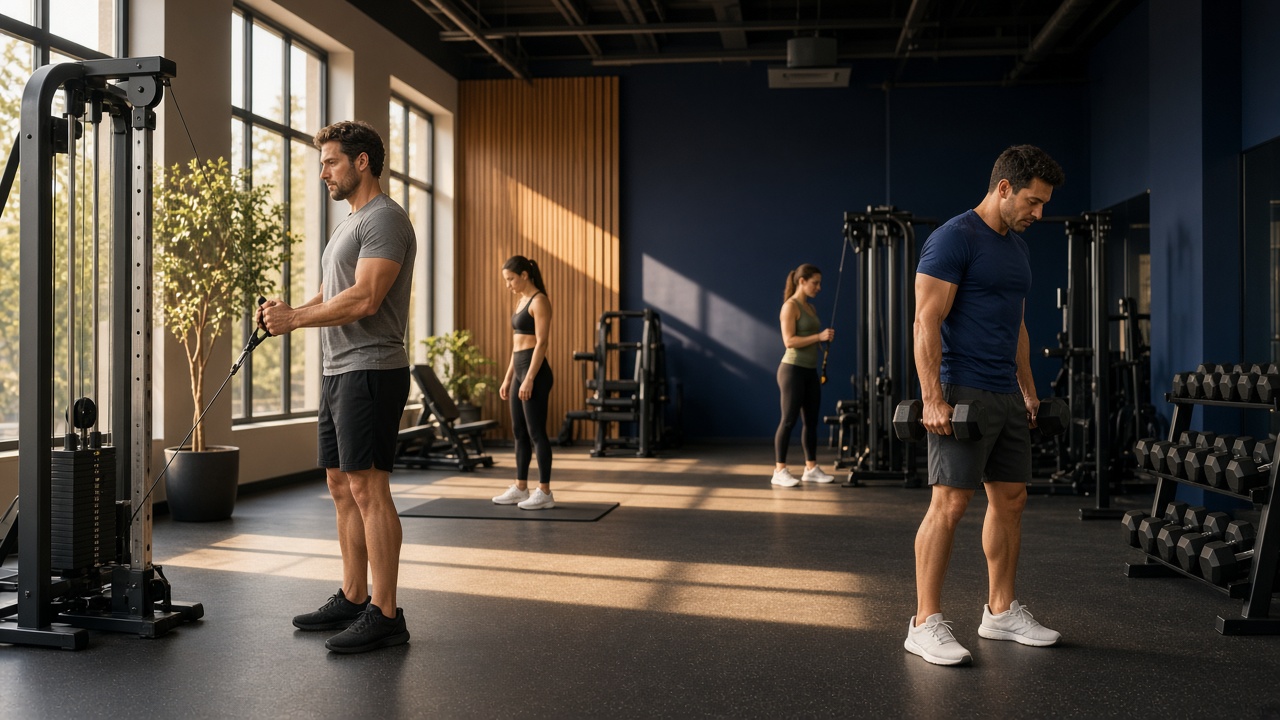
Adult women at a gym are there for their own reasons. They are not motivation equipment, potential rewards or a standing invitation to approach. The same respect applies to every other person using the space.
Follow facility rules, avoid prolonged staring and do not film or photograph others without their permission. Even if a camera is intended to record your own form, consider who appears behind you. A private workout should not become content someone else never agreed to create.
Our feature on wellbeing beyond the camera offers a useful closing thought: worthwhile experiences do not need an audience. Training can be satisfying even when nobody photographs it, compliments it or connects it to dating.
So the better question is not which physique drives women crazy. It is which goals you genuinely choose, what habits you can sustain and how you want to behave around others. Attraction may provide a spark. A more durable motivation is building a relationship with activity that still makes sense when the room is not watching.